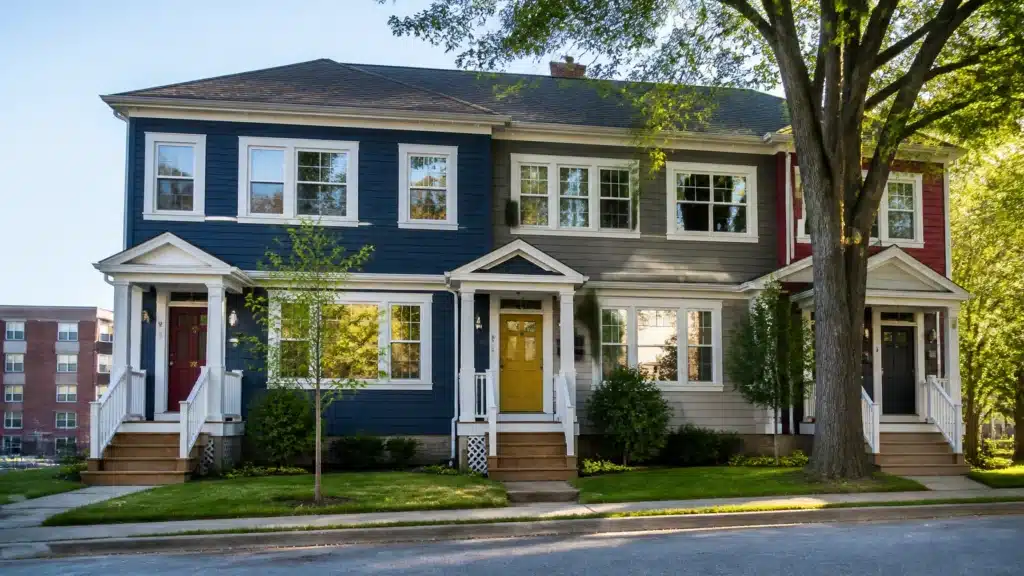
So, you’re thinking about becoming a landlord in New Brunswick? Honestly, I don't blame you. Whether you’re walking through the historic streets of Saint John, looking at the rapid growth in Moncton, or checking out the steady demand in Fredericton, our province is currently a goldmine for real estate investors. Building a rental portfolio isn't just about collecting checks; it’s about creating long-term financial freedom and building a legacy for your family right here at home.
But here’s the thing, getting that first set of keys is the easy part. The real challenge comes when you want to buy your second, third, or even your tenth property. Financing an investment property is a completely different beast compared to buying your own home. Between the 20% down payment requirements and the massive regulatory shifts coming in 2026, the game is changing.
I’m Luis Ow, and I’ve helped countless New Brunswickers navigate these tricky waters. If you’re feeling a bit overwhelmed by the "bank talk" or worried about how to scale your portfolio, you’re in the right place. Let’s break down exactly what you need to know about investment property financing in NB.
The Foundation: Getting Started with Investment Property Financing in NB
Before we talk about the big-picture strategy, we have to cover the basics. If you’re buying a property that you don’t plan to live in (a non-owner-occupied rental), the rules are strict.
1. The 20% Down Payment Rule
Unlike buying a primary residence where you can sometimes put down as little as 5%, investment properties (1–4 units) generally require a minimum of 20% down. This is because these loans are not eligible for high-ratio mortgage insurance (like CMHC). You’re essentially playing in the "conventional mortgage" sandbox from day one.
2. Credit and Income Requirements
Lenders want to see that you’re a safe bet. This means:
- A Solid Credit Score: Usually 680 or higher is the sweet spot for the best rates.
- Stable Employment Income: Even if the rental will pay for itself, the bank still wants to see that you have a "day job" or business income to cover the gaps.
- Debt-to-Income Ratios: They’ll look at your total debt (including your own home) compared to your total income.
3. Calculating Potential Rent
The bank won't just take your word for it that the basement apartment in Dieppe will rent for $1,500. They usually require an appraiser’s "opinion of market rent" or existing lease agreements. Most lenders will then use a percentage of that income (often 50% to 80%) to help you qualify for the loan.

The 2026 Shift: Why Building a Portfolio Just Got Harder
If you’ve been listening to the news lately, you might have heard about the OSFI (Office of the Superintendent of Financial Institutions) changing the rules for 2026. This is a massive deal for anyone looking to scale a rental portfolio in places like Quispamsis, Riverview, or Rothesay.
No More "Double-Counting" Your Salary
In the past, you could use your $100,000 salary to help qualify for one rental, then use that same salary to qualify for the next one, and so on. The bank would basically look at your job income as a bottomless well of qualification power.
Starting in 2026, that’s changing. For the big banks (the A-lenders), once your salary has been used to back one mortgage, it is considered "used up." To get your second or third property, the existing rentals must stand entirely on their own two feet. If Property A isn't churning out enough profit to cover its own costs plus extra to support Property B, the bank will likely say no.
The 50% Rental Concentration Test
Lenders are also becoming wary of "professional" small-scale investors. If more than 50% of your total qualifying income comes from rentals rather than a T4 job, banks are now required to hold more capital against your loans. For you, that translates to higher interest rates and much tougher approval criteria.
This is why I always tell my clients in Miramichi and Edmundston that the time to plan your growth is now, not when you’re already standing in front of the bank with a rejected application. You can read more about my thoughts on building wealth with investment properties in Bathurst and Campbellton here.
How to Scale: A Strategy for New Brunswick Investors
So, if the big banks are making it harder, how do you actually build a portfolio? The secret is in the order of operations.
- Maximize A-Lenders First: Use the big banks for your first one or two properties while your personal income is still "fresh" and available. These lenders offer the lowest rates.
- Pivot to Credit Unions: Credit Unions in New Brunswick aren't always bound by the same OSFI rules as the national banks. They can often be more flexible with how they view rental income in Oromocto or Grand Bay-Westfield.
- B-Lenders and Private Financing: Once you hit a certain size (usually 4+ properties), you might need to look at alternative lenders. The rates are higher, but they focus more on the property’s cash flow than your personal T4 income.
- The BRRRR Method: (Buy, Rehab, Rent, Refinance, Repeat). This is a popular strategy in Saint John where older homes can be bought cheap, fixed up, and then refinanced at a higher value to pull your initial 20% back out for the next down payment.

Regional Spotlight: Where to Invest in New Brunswick?
Every town in NB has its own vibe, and as a local expert, I see different trends across the province:
- Saint John: Amazing for multi-unit properties and "value-add" projects. The rental demand remains high in the uptown and north-end areas.
- Moncton & Dieppe: The fastest-growing region. If you’re looking for newer builds and steady appreciation, this is the place.
- Fredericton: Very stable thanks to the government and university presence. Vacancy rates here are notoriously low.
- Secondary Markets: Don't sleep on Woodstock, St. Stephen, Sussex, or Sackville. These towns often have lower barrier-to-entry prices with surprisingly strong rental demand.
Why Luis Ow is Your Secret Weapon in NB Real Estate
Navigating investment property financing in NB can feel like trying to solve a puzzle where the pieces keep changing shape. That’s where I come in. At M.O.S. MortgageOne Solutions Ltd., I don't just find you a rate; I help you build a plan.
When you work with me, we look at:
- Long-term Strategy: Are we aiming for one property or ten?
- Debt Consolidation: Sometimes we need to clean up your personal finances to make room for that next investment. Check out how debt consolidation can help here.
- Self-Employed Solutions: If you run your own business in Caraquet or Hanwell, traditional banks might struggle with your income. I specialize in self-employed mortgage solutions.
I’m not just a guy in a suit; I’m your neighbor who knows exactly which lenders are currently "friendly" to rental portfolios in our local market.

Risks and Things to Consider
I wouldn't be doing my job if I didn't give you the full picture. Investing in real estate has risks:
- Interest Rate Volatility: If rates spike when your mortgage is up for renewal, your cash flow could vanish.
- Vacancy & Maintenance: Always budget for at least 5% vacancy and 5% maintenance costs. A roof leak in Bathurst can happen when you least expect it!
- Legislative Changes: Rental caps or changes to the Residential Tenancies Act can impact your bottom line.
Let’s Get Your Portfolio Started
Ready to stop dreaming and start building? Whether you’re looking at a duplex in Saint John, a triplex in Moncton, or a small apartment building in Fredericton, I’m here to make the financing part the easiest part of your journey.
I offer personalized mortgage solutions across all of New Brunswick. We’ll sit down (or hop on a call), look at your goals, and find the best lender from my network of dozens of institutions.
Don't let the 2026 rules catch you off guard. Let’s lock in a strategy today.
Contact Luis Ow Today!
Phone: 506-650-7551
Email: luis@mortgageloansnb.com
Website: mortgageloansnb.com
Luis Ow (Personal License #: 250042903)
M.O.S. MortgageOne Solutions Ltd. (Brokerage License #: 210053949)
Serving all of New Brunswick: Saint John, Moncton, Fredericton, Dieppe, Riverview, Quispamsis, Miramichi, Edmundston, Bathurst, Rothesay, Shediac, Oromocto, Campbellton, Grand Bay-Westfield, Woodstock, Caraquet, Hanwell, St. Stephen, Sussex, Sackville, and beyond.
Disclaimer: The information provided in this blog post is for educational and informational purposes only and does not constitute financial, legal, or investment advice. Mortgage rules and regulations are subject to change by lenders and regulatory bodies (including OSFI and CMHC). Every individual's financial situation is unique. Please consult with a licensed mortgage professional and a financial advisor before making any significant real estate or investment decisions. All mortgage approvals are subject to lender criteria and credit approval.