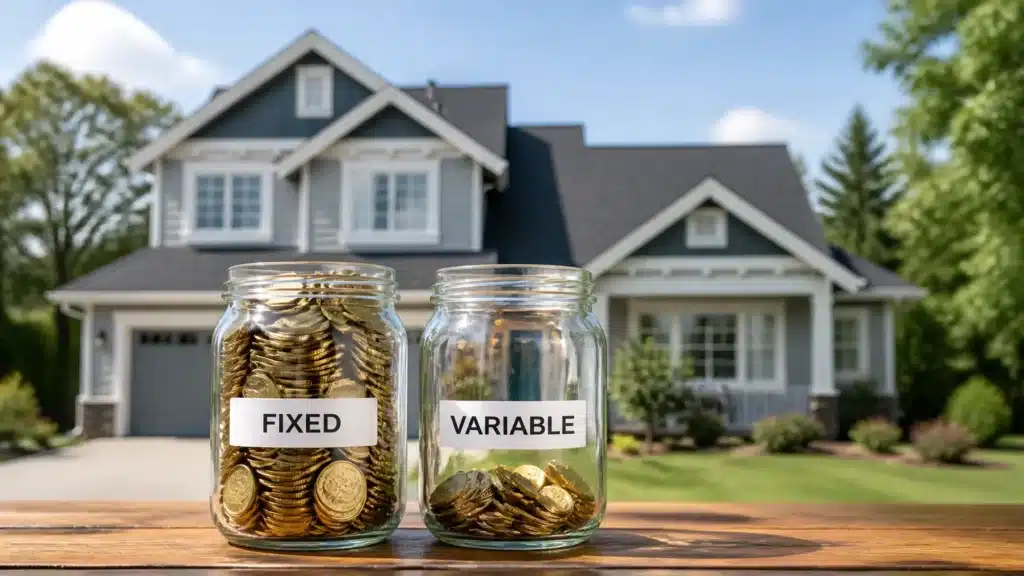
Hey there! If you’ve been house hunting lately in Saint John, checking out those beautiful new builds in Dieppe, or looking at heritage homes in Fredericton, you know that the conversation always circles back to one thing: interest rates.
I’m Luis Ow, and at M.O.S. MortgageOne Solutions Ltd., I spend my days helping folks navigate the ups and downs of the New Brunswick real estate market. Whether you're a first-time homebuyer in Moncton or looking to refinance your place in Quispamsis to finally finish that basement, the choice between a fixed and a variable rate is likely the biggest financial decision you’re facing right now.
The market has shifted quite a bit. Not long ago, fixed rates were the "cheap" option while variable rates carried a premium. But as we move through June 2026, the script has flipped. Let’s dive into what’s happening right here at home and figure out which path might be right for you.
The New Brunswick Reality: Why This Choice Matters Now
New Brunswick is a special place to live. From the bustle of Riverview and Rothesay to the tight-knit communities in Miramichi and Edmundston, we’ve seen a lot of growth. But with that growth comes the reality of higher interest rates compared to the "rock bottom" days of 2021.
Right now, many homeowners who locked in those tiny rates five years ago are coming up for renewal. If you’re one of them, maybe in Oromocto or Bathurst, you’re probably feeling a bit of "sticker shock." You can read more about why your Fredericton mortgage renewal is the perfect time to shop around to get ahead of that curve.
The choice you make today, Fixed vs. Variable, isn't just about a decimal point. It’s about your monthly budget, your sleep quality, and your long-term financial freedom.
The Case for Fixed Rates: The "Safety Net"
A fixed-rate mortgage is exactly what it sounds like. Your rate is locked in for the duration of your term (usually 3 or 5 years). It doesn't matter what the Bank of Canada does; your payment stays exactly the same.
The Pros:
- Total Certainty: You know exactly what’s coming out of your bank account every month. This is huge for families in places like Shediac or Sackville who are working with a tight budget.
- Protection Against Hikes: If inflation decides to act up and the Bank of Canada raises rates in late 2026 or 2027, you won’t feel a thing.
- Mental Peace: You don't need to check the news every morning to see what the overnight rate is doing.
The Cons:
- The "Premium": Right now, the lowest 5-year fixed rates are hovering around the 4.0% mark. That’s significantly higher than where variable rates currently sit.
- Less Flexibility: If rates drop significantly in two years, you’re stuck with your higher rate unless you pay a potentially hefty penalty to break the mortgage.
- Higher Starting Cost: You’re paying more upfront for the privilege of that "insurance" against rate hikes.

The Case for Variable Rates: The "Potential Winner"
Variable rates track the lender’s prime rate, which is influenced by the Bank of Canada’s overnight rate. In a complete reversal from 2024, variable rates are currently the more affordable starting point.
The Pros:
- Lower Initial Rate: We’re seeing variable rates around 3.3% right now. That’s a 0.7% difference from the average fixed rate! Over a $300,000 mortgage, that’s hundreds of dollars staying in your pocket every month.
- Historical Performance: Historically, variable rates have often cost less than fixed rates over the full five-year term, though the last few years were a major exception to that rule.
- Lower Penalties: If you need to break your mortgage (say, you decide to move from Woodstock to Grand Bay-Westfield for work), variable rate penalties are usually just three months of interest, which is much cheaper than the "Interest Rate Differential" calculation often used for fixed mortgages.
The Cons:
- Payment Fluctuations: If the Bank of Canada raises rates, your payment goes up (or more of your payment goes to interest).
- The "Trigger Rate" Risk: If rates rise high enough, your payment might not even cover the interest, forcing you to increase your monthly contribution.
- Uncertainty: It’s a bit of a gamble. You’re betting that the Bank of Canada will either keep rates where they are or cut them further.
Fixed vs. Variable: By the Numbers in 2026
Let’s look at a real-life example for a home buyer in Saint John. If you’re looking at a $350,000 mortgage:
- 5-Year Fixed at 4.0%: Your monthly payment (principal + interest) would be approximately $1,840.
- 5-Year Variable at 3.3%: Your monthly payment would start at approximately $1,710.
That’s $130 a month in savings right out of the gate. Over a year, that’s $1,560. In New Brunswick, that pays for a lot of heating oil or a pretty nice staycation in St. Stephen or Caraquet!
The question is: Is that $130 worth the risk that rates might go up? If rates rise by 0.75%, your variable payment would suddenly be higher than the fixed one you walked away from.

Market Forecasts: What Should We Expect?
Most financial experts and big banks are forecasting that the Bank of Canada will hold its policy rate steady at around 2.25% through much of 2026. However, there’s a growing sentiment that we might see some slight "upward pressure" in 2027 if inflation doesn't stay in its lane.
For my clients in Hanwell and Sussex, I always say: Don't try to time the market perfectly. No one has a crystal ball. Instead, choose the option that fits your personal "stress test."
- Choose Fixed if: You have a fixed income, a low tolerance for risk, or you’re planning to stay in your home for the next 10+ years and just want to know your costs.
- Choose Variable if: You have some wiggle room in your monthly budget, you think rates might stay flat or drop, or you value the flexibility of lower penalties if you need to sell or refinance early.
How I Can Help You Navigate the Choice
Choosing a mortgage shouldn't feel like you're alone in a storm. As a licensed Mortgage Associate with M.O.S. MortgageOne Solutions Ltd., my job is to look at your whole picture. I don't just look at the rate; I look at your goals.
Are you a newcomer to Canada settling in Moncton? A self-employed contractor in Campbellton? Or a family in Rothesay trying to consolidate high-interest debt? Each of these situations requires a different strategy. I offer personalized mortgage solutions that aren't just "off the shelf." I have access to dozens of lenders, from the big banks to private options, ensuring we find the fit that actually makes sense for your life.
You can check out what some of my other clients have to say on my reviews page. I pride myself on being reachable, supportive, and, most importantly, honest about the risks and rewards of each option.

Final Thoughts: The Goal is Financial Independence
Whether you go with a fixed rate for the peace of mind or a variable rate to save some cash today, the goal is the same: building equity and achieving financial independence in our beautiful province.
New Brunswick is full of opportunity, but the mortgage landscape can be tricky. Don't let the big bank "posted rates" be your only guide. Let's sit down (or hop on a call) and look at the numbers together. I’m here to help you regain control of your finances and unlock the opportunities that homeownership provides.
Ready to find out which rate is best for your specific situation?
Give me a shout today. I work with clients across all of New Brunswick, from the heart of Saint John to the quiet corners of the province. Let’s get you the best deal possible.
Luis Ow
Mortgage Associate
M.O.S. MortgageOne Solutions Ltd.
Contact Information:
- Phone: 506-650-7551
- Email: luis@mortgageloansnb.com
- Website: mortgageloansnb.com
License Numbers:
- Luis's Personal License #: 250042903
- Brokerage License #: 210053949
Disclaimer: Mortgage rates and market conditions are subject to change without notice. This post is for informational purposes only and does not constitute financial advice. Please consult with a licensed professional to discuss your specific financial situation.